


Tips on How to Layer to Stay Warm This Winter
Layering keeps you warm in winter and lets you adjust as the temperature changes through the day. This guide covers how to build a layering system, from a thin base layer to a mid layer, outerwear and accessories, and how different fabrics behave.
Why layer in winter?
Several thin layers trap warm air between them, and you can add or remove a layer as you move between a cold street and a heated shop, office or train. A typical system has three parts: a base layer next to the skin, a mid layer for extra warmth, and an outer layer for wind and rain.
Why thin layers work well
Thin layers are easier to move in, easier to adjust and easier to pack than one thick piece. Each layer holds a little warm air, and taking one off is simple if you start to overheat.
Building your base layer

The base layer sits closest to your skin, so fit and fabric matter. A fairly close fit works best, because a loose base layer leaves gaps where warm air escapes. Fibres such as merino, cashmere, cotton and modal are all commonly used next to the skin.
Our vest top and micro modal leggings are soft, lightweight pieces that work well as a first layer under knitwear and trousers. Our leggings are made in the UK and Portugal.
The mid layer
The mid layer adds the main warmth. A roll neck top is a good choice because it also covers the neck. Roll necks in merino, cashmere or modal sit comfortably under a jumper or jacket. Add a knit, cardigan or fleece on top if it is very cold.
Fabric choices
Natural fibres such as merino wool, cashmere and silk are popular for winter layering, and wool can feel warm even when slightly damp. Modal is a soft, smooth fibre made from beech wood pulp that works well as a thin layer. Pick the fabric that feels comfortable on you and suits the weather you will be in.
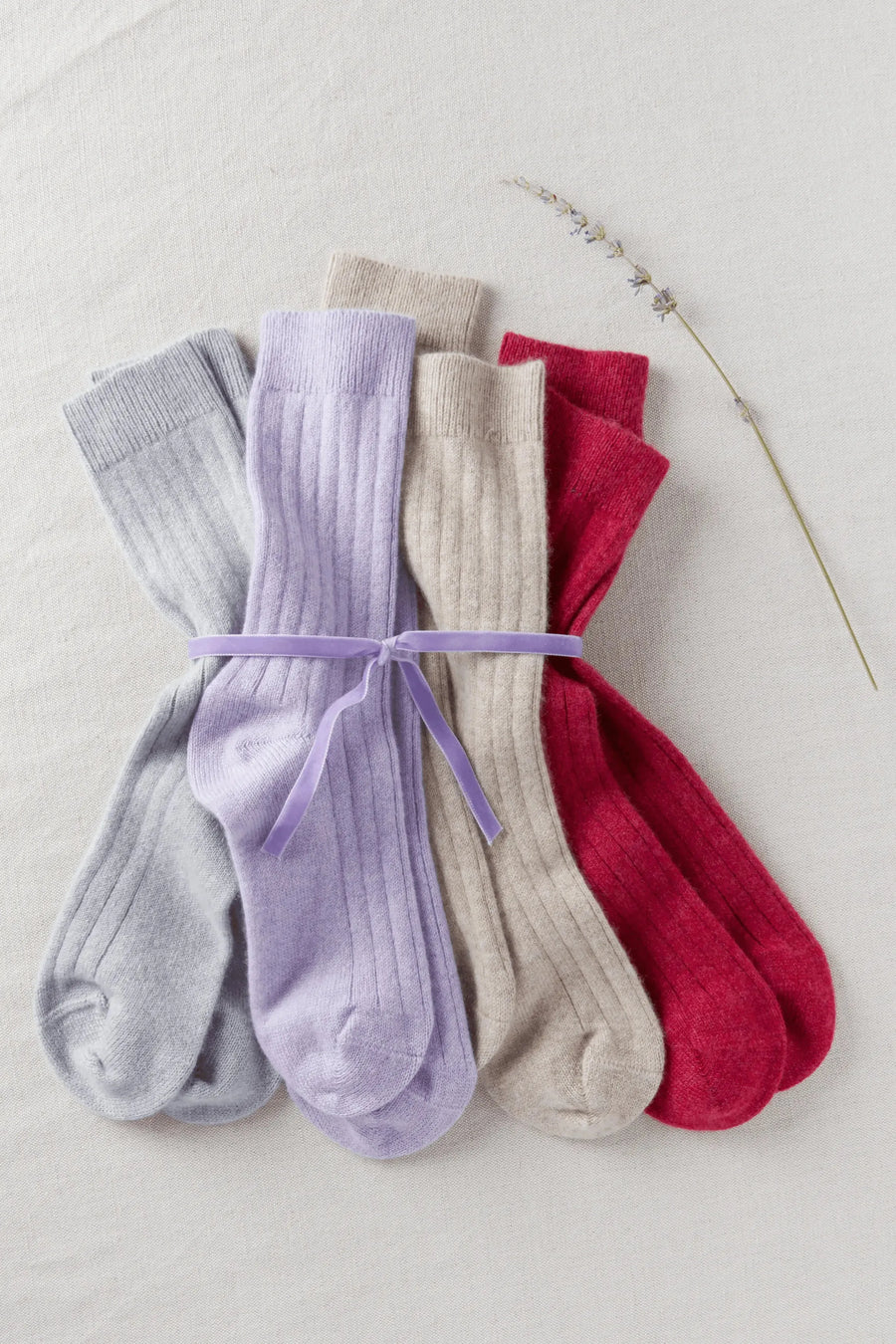
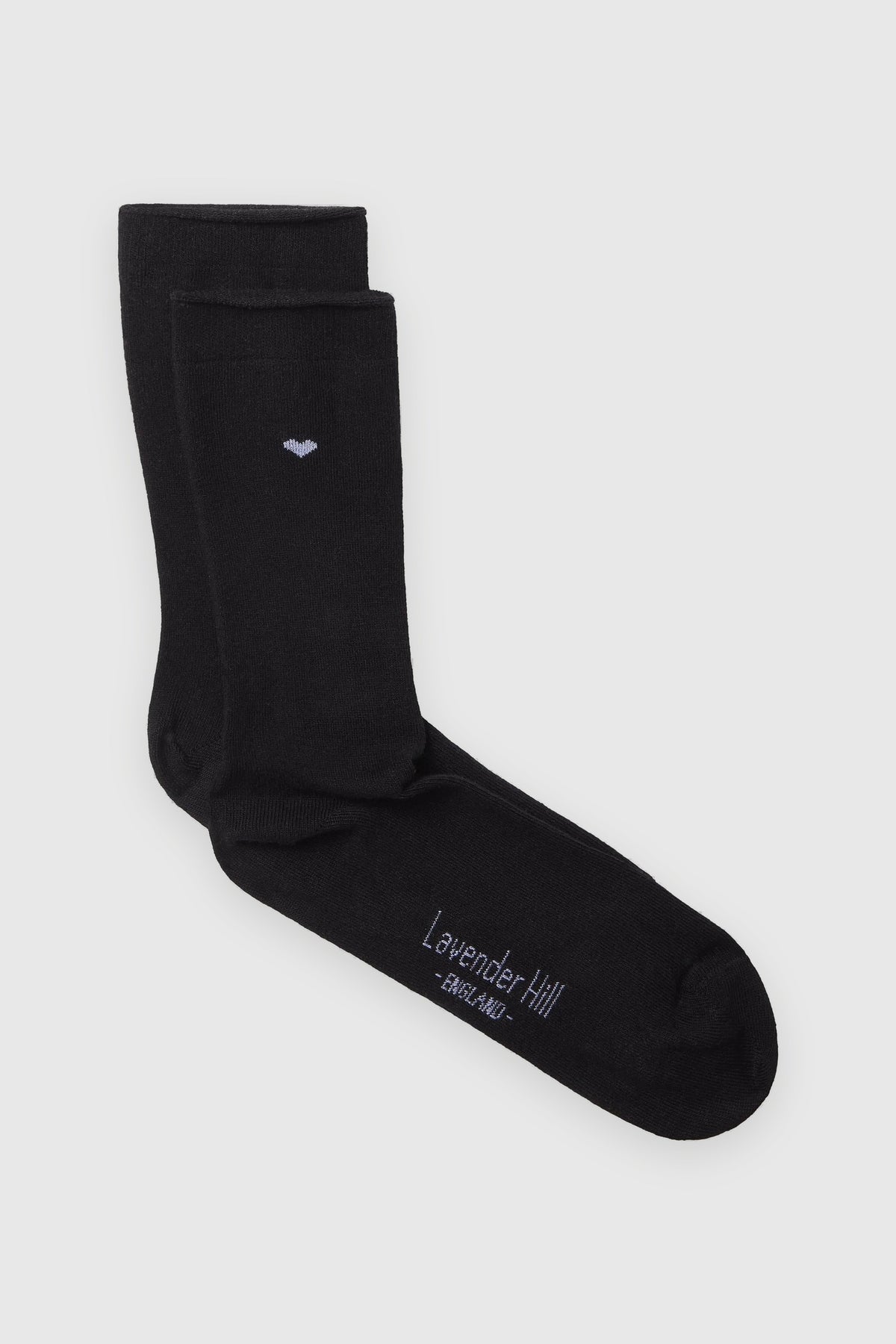
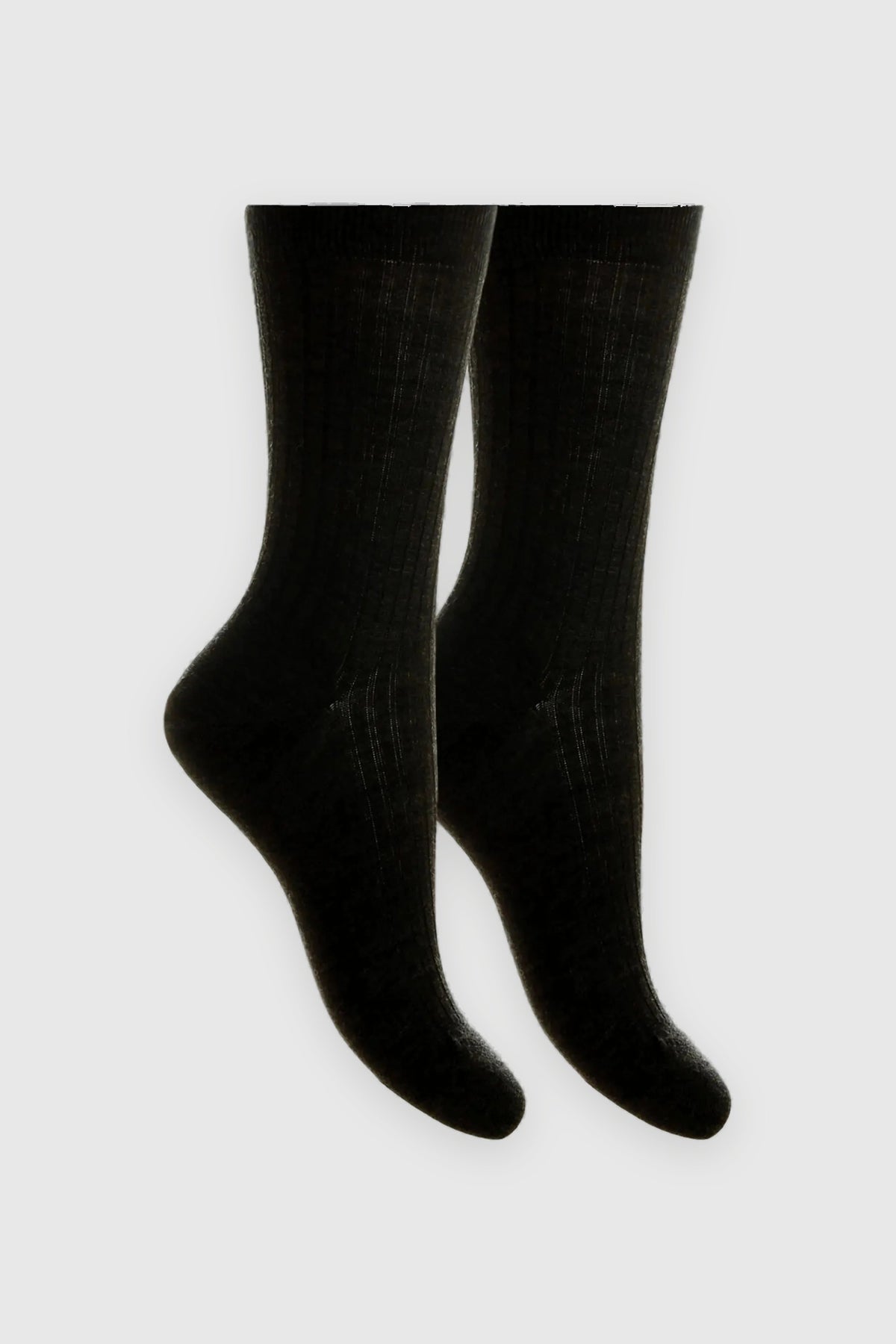
Merino and cashmere socks

Warm feet make a large difference to how cold you feel. Merino and cashmere socks are both soft and warm. Our merino and cashmere socks are made in the UK. See the full sock collection.
Layering tips for the upper body
Choose tops of different thicknesses and build up from light to heavy. Start with a thin base, add a roll neck or fine knit, then a jumper or cardigan, and finish with a coat or jacket. Check that each layer can be worn without the one above it, so you are comfortable indoors.
How to layer tops
- Base: a close-fitting vest or long-sleeved top.
- Middle: a roll neck or fine-knit jumper.
- Top: a cardigan, hoodie or knit if you need more warmth.
- Outer: a coat or jacket that is windproof or waterproof, depending on the weather.
Outerwear for cold weather
Layers keep warmth in, but outerwear protects against wind, rain and snow. Insulated jackets, wool coats and waterproof shells are all options. Choose a shape with enough room to go over your layers without squashing them, since trapped air is what keeps you warm. A fleece or hoodie can sit between your top layer and your coat for very cold days.
Keeping your head, hands, legs and feet warm

- Head: a hat or beanie, and a scarf for the neck.
- Hands: gloves or mittens. Our cashmere accessories are made in Scotland.
- Legs: leggings under trousers or a skirt, or thermal tights in very cold weather.
- Feet: thick socks, or two thinner pairs if your shoes have room.
The final touches: accessories
Hats, scarves and gloves add warmth where you lose it quickly, and you can take them off easily when you come indoors. Our cashmere hats, scarves and gloves are made in Scotland and are soft and light enough to fit into a coat pocket.
How does layering work for warmth?
Layering traps air between the layers, and that air is warmed by your body. It also lets you remove a layer before you start to sweat. Damp clothes feel cold, so avoiding overheating helps you stay comfortable.
Do natural fabrics make a difference?
Different fibres feel and behave differently. Merino and other wool fibres are widely used for warm layers, silk is smooth and light, and cashmere is very soft. Synthetic fibres are also common in outerwear and sportswear. For everyday winter layering, comfort and fit matter as much as the fibre itself.
In summary
Start with a thin, close-fitting base layer, add a roll neck as a mid layer, then a jumper or cardigan and a coat suited to the weather. Keep your head, hands and feet covered, and take layers off as you warm up. Browse our layering tops, socks and cashmere accessories.