Article: Linen, Hemp, Flax and TENCEL™ Lyocell: What Are the Differences?
Linen, Hemp, Flax and TENCEL™ Lyocell: What Are the Differences?
Linen, hemp, flax and TENCEL™ Lyocell are all fibres made from plants, but they feel and behave differently. This guide explains what each one is, how they compare in the wardrobe, and how to care for them.
What are linen, hemp, flax and TENCEL™ Lyocell?
- Flax is the plant. Its stem fibres are spun into linen yarn.
- Linen is the fabric woven or knitted from flax fibres.
- Hemp is a separate plant (Cannabis sativa, grown for fibre rather than for drugs). Hemp fabric has a coarser, more textured handle than linen when new.
- TENCEL™ Lyocell is a branded lyocell fibre made by Lenzing from dissolved wood pulp, spun into a smooth, fine fibre. Lyocell is a manufactured fibre made from plant cellulose, not a fibre taken straight from a crop.
How they compare
| Fibre | Feel | Best for |
|---|---|---|
| Linen | Crisp when new, softer with washing | Summer tops, shirts, trousers |
| Hemp | Firm, slightly rough, softens with wear | Casual, hard-wearing pieces |
| TENCEL™ Lyocell | Smooth, fluid, silky | Drapey tops, dresses, soft jersey |
Linen
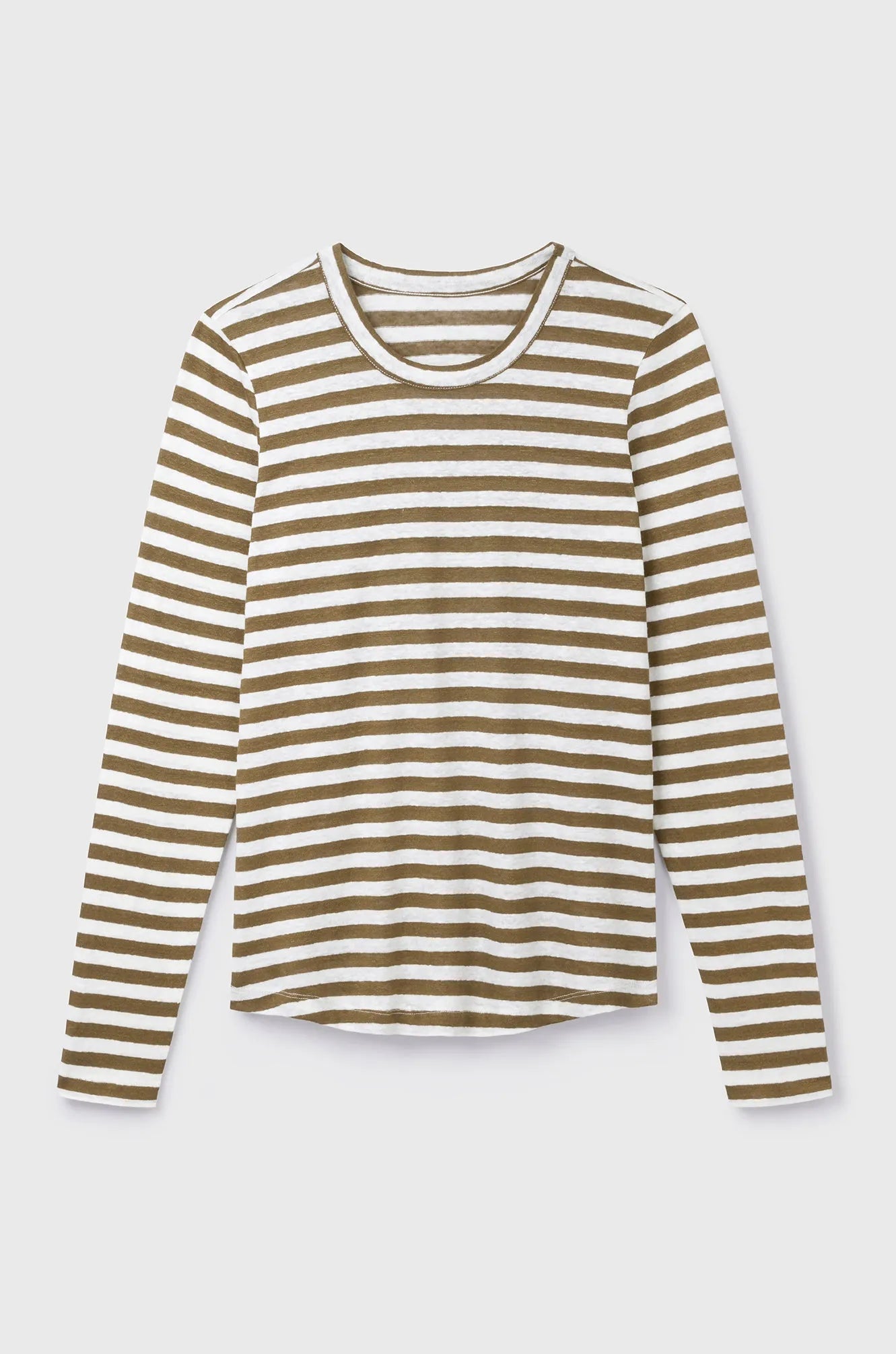
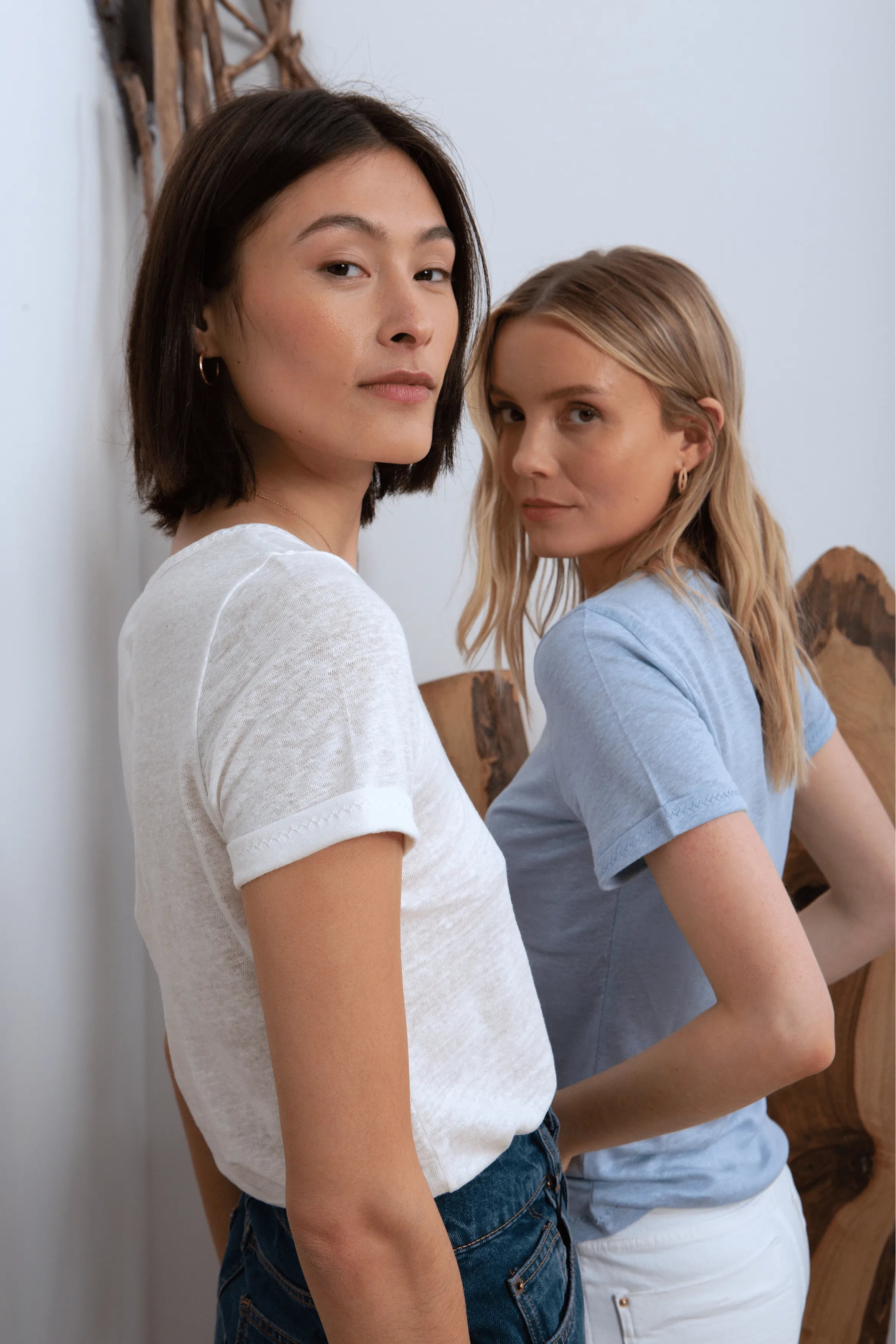
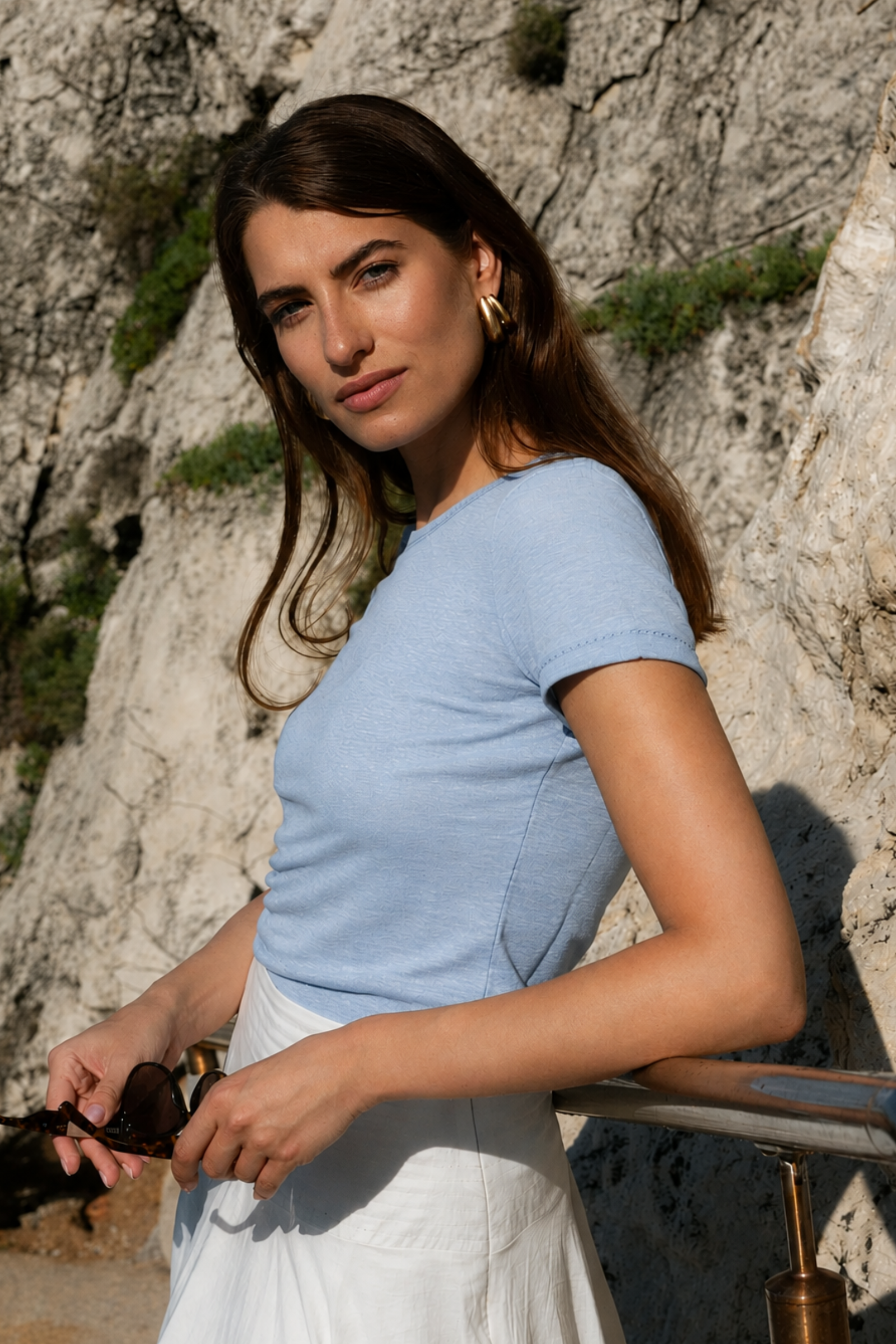
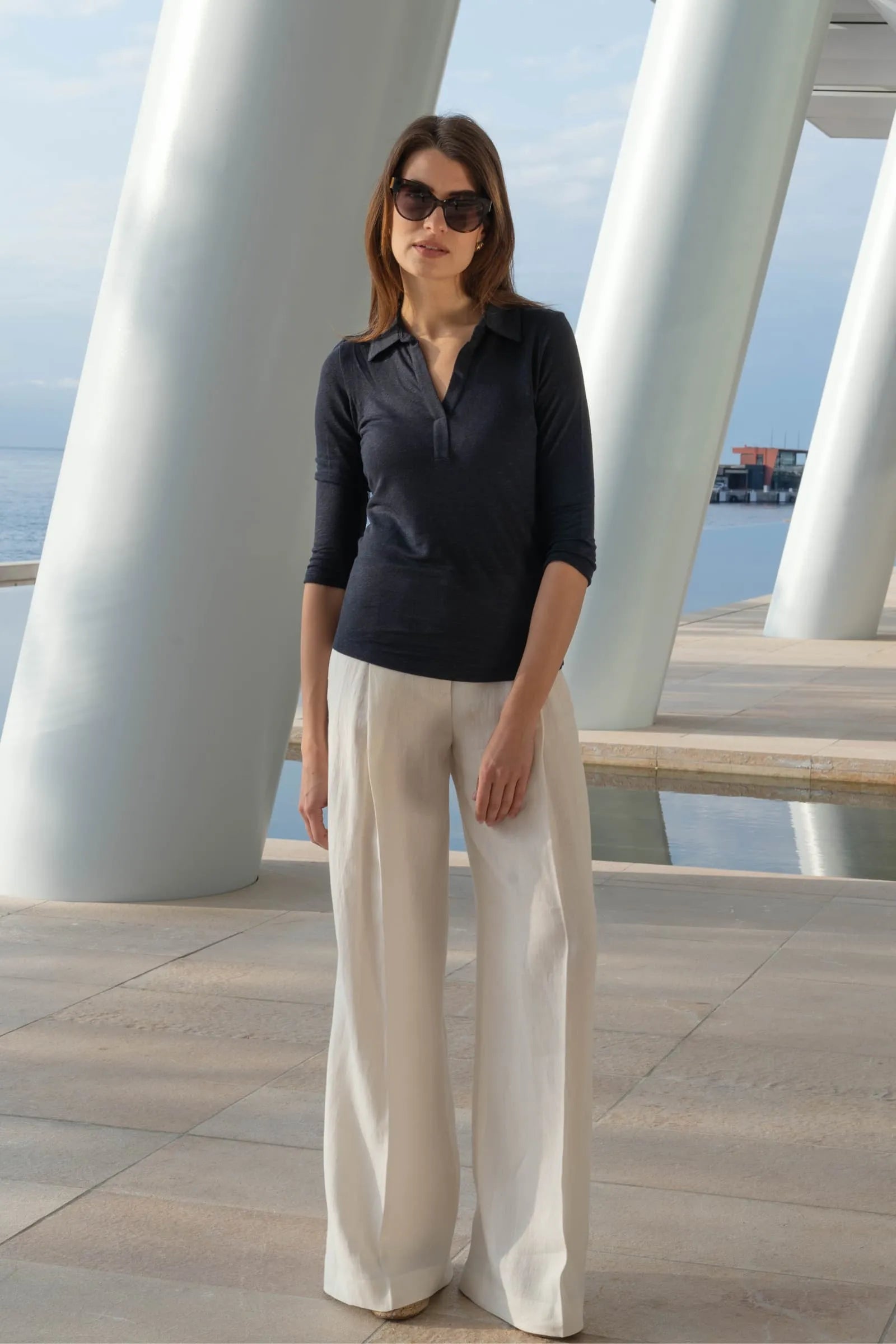
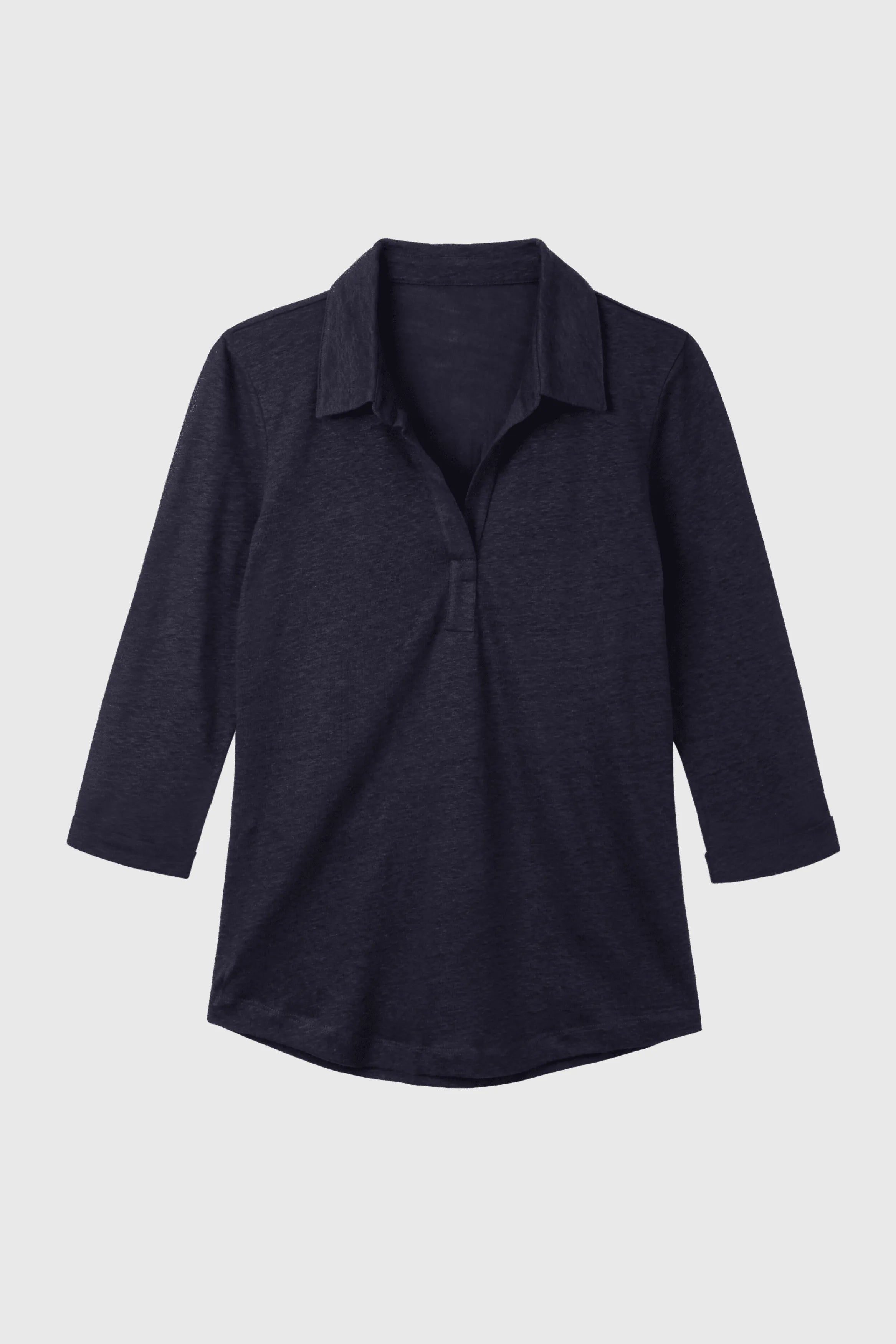
Linen is known for being airy and quick to dry, which is why it is a warm-weather staple. It creases easily, and most people accept that as part of its character. Linen has a natural lustre and becomes softer with repeated washing. Our linen T-shirts are an easy way to try it, and there is more on linen T-shirts on our guide page.
Hemp
Hemp fibre is strong, and hemp fabric is durable. It is often blended with cotton or linen to soften the handle. It is less common in everyday womenswear than linen.
TENCEL™ Lyocell
TENCEL™ Lyocell has a smooth surface and a fluid drape. It is breathable and absorbs moisture well, and it is often used in tops and bedding. Lenzing makes it from wood pulp in a process it describes as a closed loop, where the solvent is recovered and reused. We use TENCEL™ Lyocell and TENCEL™ Modal in some of our pieces. For more detail, see what is lyocell and what is modal fabric.
Farming and processing: what to keep in mind
It is common to see these fibres described in simple terms as better or worse than each other. The reality is more mixed, and no single fibre is best on every measure.
- Water and pesticides. Flax and hemp are generally grown with less water and fewer inputs than conventional cotton, but results depend on where and how they are farmed.
- Processing. Turning flax into linen involves retting (loosening the fibres) and spinning, and the method used varies by producer. Lyocell production uses chemical solvents, and how well they are recovered depends on the manufacturer.
- Dyeing and finishing. These steps affect the overall impact of any garment, whatever the fibre.
What certifications cover
Standards such as GOTS (the Global Organic Textile Standard) apply to organic fibres and their processing. Others, such as OEKO-TEX, test finished products for certain substances. Each covers something specific, so check what a label actually refers to. If a brand names a certification, it should say which product or material it applies to.
Performance and durability
- Moisture. Linen, hemp and lyocell all absorb moisture and dry fairly quickly, so they feel comfortable in warm weather.
- Durability. Linen and hemp are strong fibres and tend to hold up well to repeated washing. Lyocell is also strong, especially when wet, though a lightweight knit can pill or snag like any fine jersey.
- Fibre structure. Flax and hemp are bast fibres from the plant stem, with a slightly irregular surface that gives linen its texture. Lyocell fibres are engineered to be uniform and smooth.
Other fibres worth knowing
- Wool and merino. Warm, breathable and soft in fine grades. See what's all the fuss about merino wool.
- Cotton. A versatile everyday fibre. Our cotton fabric guide explains the differences between types.
- Bamboo viscose. Usually a viscose or rayon made from bamboo pulp. The finished fabric is a manufactured cellulosic fibre, so check the label for its true name.
- Polyester and nylon. Synthetic fibres made from petroleum. They are durable and quick-drying, and they shed microfibres when washed, so a mesh wash bag or a filter can help.
- Piñatex and newer materials. Plant-based leather alternatives such as Piñatex are interesting developments, though not yet common in everyday clothing.
How to choose
- Think about the season. Linen for heat, lyocell or modal for fluid softness, merino for layers.
- Think about care. Linen wrinkles, lyocell may need a gentler wash, and wool needs a wool-safe detergent. Choose what suits how you live.
- Read the label. Fibre content, country of manufacture and care instructions tell you more than any general description.
- Buy for repeat wear. The garment you wear often will almost always be the better choice than one that sits in the wardrobe.
Summary
Each of these fibres has its own character: crisp linen, textured hemp, smooth lyocell. The right one depends on the season, the garment and the care you are willing to give it. Browse our linen T-shirts or yogawear to see how different fabrics feel in practice.